


OnlyFans pricing looks simple on the surface: a creator picks a number, you pay it, and access unlocks. The reality is more structured. Platform rules set hard boundaries, creator behavior clusters inside those boundaries, and the result is a set of recognizable pricing bands that shape what subscribers actually get for their money. BestOnlyFans treats those bands as the starting point for every comparison.
This guide explains where the boundaries sit, why most pages land in a narrow middle range, and how to read price information critically before you subscribe. It also covers promotional pricing, price changes, and budget planning across multiple pages. BestOnlyFans refreshes its rankings every month.

Platform Pricing Boundaries and How They Work
OnlyFans enforces a paid subscription minimum of $4.99 and a maximum of $49.99. Those two numbers frame every pricing decision a creator makes. A paid page cannot sit below $4.99 as its base rate, which removes the race-to-the-bottom dynamic common on open marketplaces. The BestOnlyFans method stays consistent across updates.

Promotional first months are the exception. A creator can offer a $3 first month to attract new subscribers, but the regular base price must still respect the floor. That distinction matters when you evaluate whether a low price is permanent or temporary.
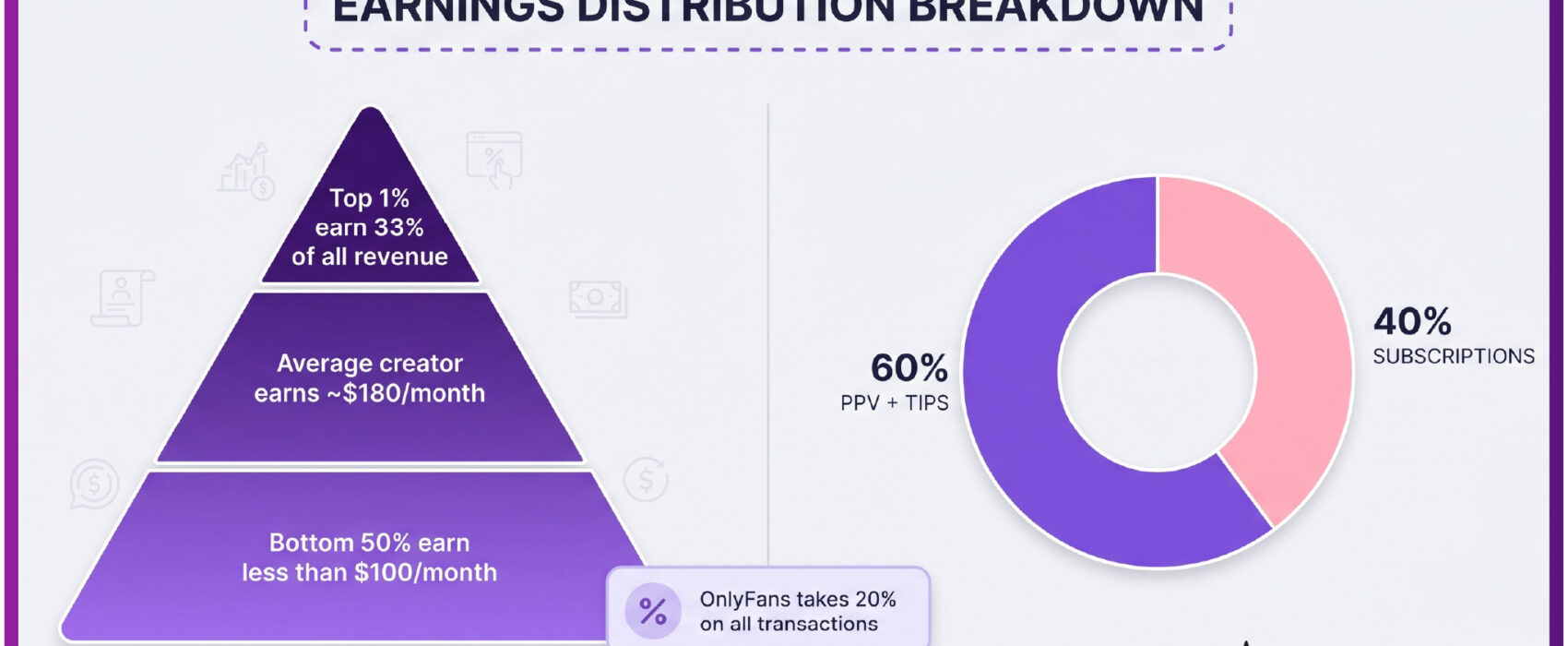
The 20% platform fee applies to everything: subscriptions, tips, and pay-per-view unlocks. Creators keep 80%. This single mechanic explains a great deal about pricing behavior, because creators price with their net payout in mind, not the sticker number.
| Rule | Mechanic | Subscriber Impact |
|---|---|---|
| $4.99 minimum paid price | Base subscription cannot be set below this figure | Removes ultra-cheap paid tiers; free pages become the only $0 option |
| Promotional first-month exception | Introductory months can dip below $4.99, for example $3 | Low headline prices may not reflect the ongoing rate |
| $49.99 maximum | No base subscription may exceed this ceiling | Caps how much a single page can charge for entry access |
| 20% platform fee | Creator keeps 80% of subscriptions, tips and PPV | Creators price upward to hit target net income |
Free pages work differently. They set the price to $0 and earn through pay-per-view messages and tips instead. That model pushes monetization away from the subscription itself and into individual unlocks, which changes how you should budget for those pages.
Where Most Creators Actually Price Their Pages
Despite a ceiling of $49.99, most paid pages cluster far below it. The typical range runs from $4.99 to $15, with averages concentrating between $5 and $10. The middle of the allowed range is where most creators choose to sit.
The reasons are practical. A price near the floor signals accessibility and lowers the barrier for a first-time subscriber. A price far above $15 invites direct comparison against pages with larger media libraries, which is a difficult position for smaller accounts.
This clustering creates a useful behavioral signal. When a page prices at $5, it is usually optimizing for volume and repeat renewals. When a page prices at $25 or higher, it is optimizing for a smaller, more committed audience, and the content and messaging typically reflect that intent.
Tip: treat the base price as a statement of positioning, not a measure of quality. A $6 page and a $30 page target different subscriber behaviors, and both can deliver value within their own band.

How Ranking Cards Display Price Band Information
OnlyFans has no built-in discovery feed or directory. That absence is precisely why ranking and directory sites exist, and price is one of the few objective filters they can apply consistently across thousands of pages.
Most ranking sites group pages into tiers: free, entry paid, mid paid, and premium. How they define those tiers varies, so the label matters less than the underlying number. Always check the raw price before trusting a category name.
- Select a price range filter rather than browsing unfiltered lists.
- Verify whether the displayed price is promotional or the regular base rate.
- Check PPV density, since a cheap subscription with heavy PPV can cost more overall.
- Compare media counts and posting frequency across pages in the same band.
- Confirm the data is current, because prices change and stale cards mislead.
A ranking card is a starting point, not a verdict. The filtering platform organizes pages by measurable attributes; it cannot measure whether you personally find a page worth renewing.
Matching Price Bands to Monthly Budget Buckets
The goal is to decide your total monthly spend first, then allocate it across pages rather than subscribing reactively and discovering the total afterward.
- $10 conservative: one entry-band page at $5-$10, or two free pages with a small PPV allowance.
- $15 moderate: one mid-band page at $10-$15, or two entry-band pages at $5-$7 each.
- $25 flexible: one mid-band page plus one entry-band page, with roughly $5 reserved for PPV.
- $40 enthusiast: two mid-band pages plus one entry-band page, with $8-$10 set aside for unlocks.
- $80 premium: a mix across all bands, including one page in the $20-$49.99 tier, with a defined PPV cap.
PPV unlocks can reach $50 per message, and paid chat commonly runs $3-$5 per message. Those costs sit outside the subscription and can quietly double your monthly total if you do not budget for them separately.

When Promotional Pricing Distorts Band Perception
A $3 first month makes a page look like it belongs in the entry band when its regular rate may be $12. That gap is the single most common source of confusion in subscriber budgeting.
The distortion is temporary by design. Promotions run for a defined period, after which the standard price applies to renewals. If you subscribed at a promotional rate, your first renewal will reflect the base price unless you cancel beforehand.
- No stated regular price anywhere on the page or listing.
- Countdown or urgency language pushing an immediate decision.
- A new account paired with an unusually heavy discount.
- An abrupt price jump visible in the page’s ranking history.
None of these signs proves bad intent on their own. Together they indicate that you should verify the ongoing rate before treating the headline number as the page’s band.
Table: Price Band Comparison Across Page Types
The table below maps the four structural page types against access, PPV behavior, and budget fit. Use it as a first-pass filter before examining content quality or engagement.
| Price Band | Base Access | Typical PPV Frequency | Budget Fit |
|---|---|---|---|
| Free ($0) | Feed access with limited media | High; PPV and tips are the main revenue | $10 or lower monthly tiers |
| $4.99-$9.99 | Full feed access included | Moderate; periodic paid messages | $10-$25 tiers |
| $10-$19.99 | Full feed plus more frequent posting | Moderate to low; more included content | $25-$40 tiers |
| $20-$49.99 | Full feed with premium positioning | Low; higher share of included media | $40-$80 tiers |
The pattern is consistent: as the base price rises, the reliance on PPV tends to fall. That relationship is what makes band-based budgeting more reliable than comparing individual page prices in isolation.
Why Creators Move Between Pricing Bands
Prices are not fixed. Creators adjust them as their audience, costs, and positioning change, and those adjustments move pages between bands over time. Recognizing the common motivations helps you anticipate changes rather than being surprised by them.
- Audience maturation: a settled subscriber base supports a higher base rate.
- Content production costs: larger shoots and editing require more revenue per subscriber.
- Competitive positioning: matching or deliberately departing from similar pages in the same niche.
- Platform fee pressure: the 20% cut pushes creators to adjust gross pricing to protect net income.
- Seasonal demand shifts: temporary promotions during slower periods, then a return to the base rate.
There is one important protection built into the system. When a creator raises their price, auto-renew stops for existing subscribers. Your access continues until the paid period ends, so a price hike never charges you the new rate without your explicit action.
If you compare pages across regions and niches, ranking resources such as best only fans usa can help you see how pricing bands differ by category before you commit to a subscription.

Building a Filtering Habit Around Price Architecture
Price bands are most useful as a first filter, applied before you look at content style, posting frequency, or engagement. That order prevents you from becoming attached to a page that does not fit your budget.
- Confirm the non-promotional base price before subscribing.
- Locate PPV pricing patterns and estimate monthly unlock spending.
- Check auto-renew status and understand when it stops.
- Set a calendar reminder a few days before each renewal date.
- Cap your total monthly allocation across all bands in advance.
The card verification hold of $0.10 is refunded within days and is unrelated to subscription pricing, but it is worth knowing so it does not appear as an unexplained charge. Tips can reach $100, which is another cost outside the band structure.
Treat the framework as a discipline rather than a restriction. Knowing which band a page occupies tells you what kind of access model to expect, how much extra spending is likely, and whether the page fits the budget bucket you have already defined.

FAQ
Can a creator charge less than $4.99 for ongoing access?
No. The $4.99 figure is the platform floor for a paid base subscription, and a page cannot set its ongoing rate below it. Promotional first months are the only exception, which is why you may see a $3 introductory offer on a page whose regular price is higher.
Why do most OnlyFans pages cost between $5 and $10?
That range balances accessibility with meaningful net income after the 20% platform fee. Pricing near the floor attracts more first-time subscribers and supports renewal volume, while pricing well above $15 invites direct comparison with pages that have larger media libraries.
How do I tell if a low price is promotional or permanent?
Look for a stated regular price alongside the offer, check whether the page mentions a limited period, and review the price history if the ranking site displays one. A page with no stated base rate and urgency language signals a temporary promotion.
What happens to my subscription if a creator raises their price?
Auto-renew stops automatically when the price increases. You keep access until the current paid period ends, and the new rate only applies if you actively resubscribe. This rule prevents surprise charges at the higher price.